
Exploring London’s Most Beautiful Garden Landscapes
Look out your window. Do you see a tired patch of lawn, a bland concrete patio, or a balcony that’s become a storage space? For many Londoners, that small outdoor area feels more like a challenge than a retreat. The variable weather, overlooked setting, and often-tricky clay soil can make it tempting to just close the curtains. But what if you could turn that space into your own private oasis, a perfect spot for a morning coffee or an evening with friends?
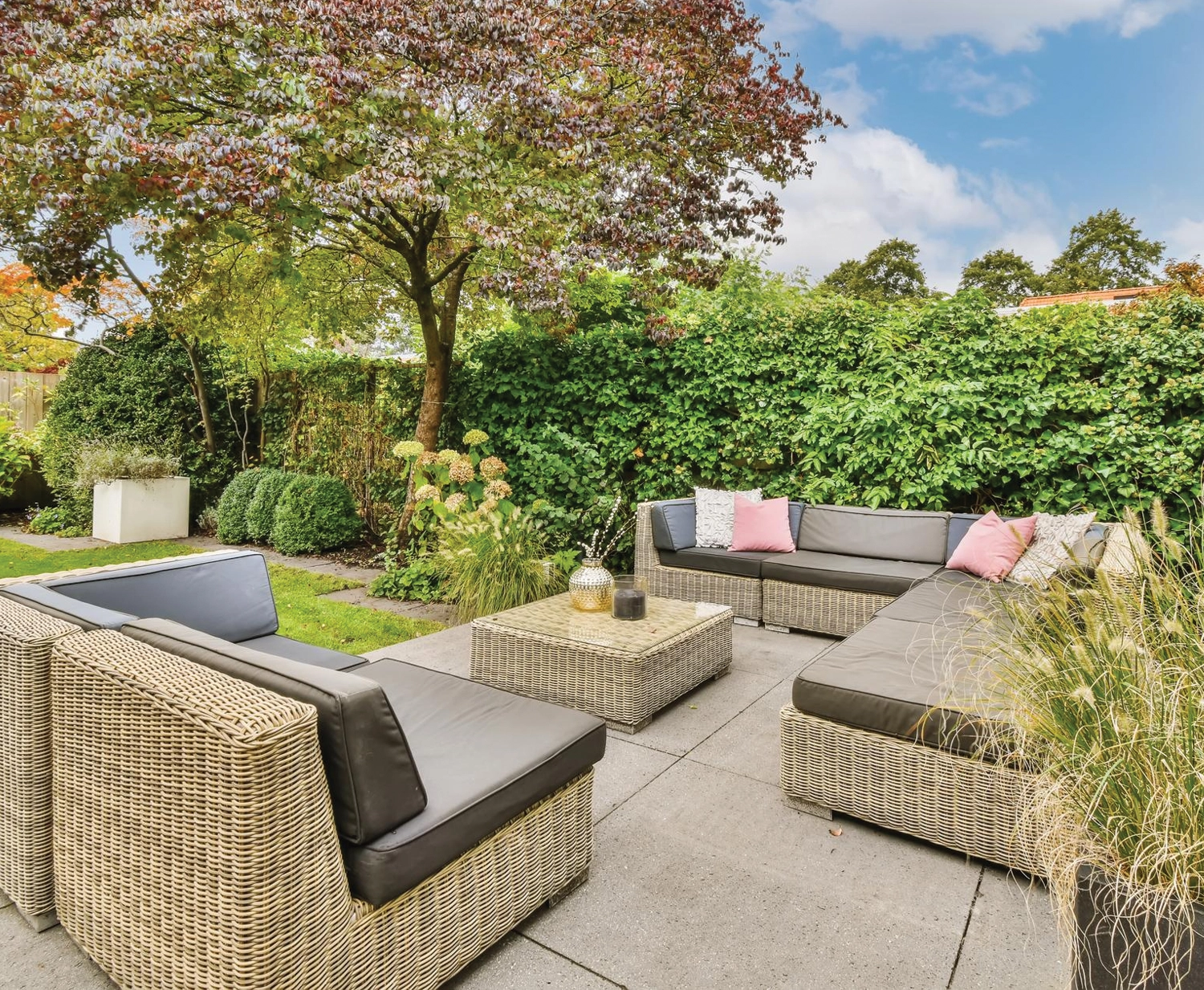
The secret is to stop thinking of it as a ‘garden’ and start seeing it as an ‘outdoor room’. This simple shift in perspective is the foundation of great urban garden design. Think of your outdoor space as an extension of your home: the patio becomes your living room floor, a bench acts as a sofa, and climbing plants on a trellis serve as beautiful wallpaper. This transforms a forgotten plot into a functional and desirable part of your home.
This guide will replace confusion with confidence, providing a clear path from inspiration to a finished space you’ll love. By breaking down the fundamentals of garden landscaping in London—from design and planting to the practicalities of cost and construction—you’ll gain the knowledge to create the beautiful, usable retreat you deserve.
The Two Building Blocks of Every Great Garden: Hardscaping vs. Softscaping
To bring that “outdoor room” concept to life, every garden landscape relies on two fundamental elements. The first is hardscaping—these are the solid, structural foundations of your garden. Think of your patio, paths, fences, walls, or decking. It’s the non-living framework that gives your space shape and usability year-round. The second is softscaping, which is all the living, growing material: the plants, lawn, trees, and shrubs that bring colour, texture, and life to the garden.
If your garden were a living room, hardscaping would be the floor, walls, and essential furniture, while softscaping would be the cushions, artwork, and houseplants that make it feel personal and inviting. A great London garden design balances both. Too much hardscaping can feel like a sterile yard, while too much softscaping can quickly become an unruly, high-maintenance jungle with nowhere to sit.
Getting this balance right is one of the first steps in effective garden planning. Look at your space now: is it dominated by paving, or is it a sea of green with no clear structure? The hardscaping provides the bones of the design, and for most London gardens, the biggest decision starts right under your feet.
Patio or Decking? Making the Right Choice for Your London Garden
With the hardscaping foundation in mind, the first major decision is often a classic one: patio vs decking for your London garden? This choice sets the tone for your entire outdoor space. A patio, with its solid, grounded feel, often feels like a seamless extension of your home, while a deck can create a softer, more relaxed “on-holiday” vibe.
For many London gardens that are overlooked or north-facing, a modern patio is often the smarter choice. This is where porcelain paving has become a game-changer. Unlike some traditional stone that can become slippery and dark with algae in damp shade, porcelain is non-porous. It resists stains and moss, and—most importantly—comes in light, reflective colours. Using large, pale grey or cream tiles is a classic designer trick to bounce light around a small, shady space, making it feel instantly brighter and bigger.
Of course, the warmth of a deck has its own appeal, especially for levelling out a sloping or uneven garden. While traditional timber requires annual staining and can become slick in the rain, modern composite decking offers a fantastic alternative. Made from a mix of recycled plastic and wood fibres, it won’t rot, warp, or need sealing. While the initial composite decking cost is higher than for timber, you save significantly on long-term maintenance time and expense.
Ultimately, your decision rests on style, light, and upkeep. If brightening a shady courtyard is your priority, the clean lines and light-reflecting properties of porcelain paving are hard to beat. If you want a softer, more rustic feel or need to build over an awkward slope, decking might be the answer.
How to Create ‘Rooms’ in Your Garden, No Matter the Size
Just having one big patio or a single stretch of lawn can make an outdoor area feel a bit one-note and, surprisingly, smaller than it is. The secret professionals use to add interest and a sense of discovery is to imagine your garden as a series of outdoor ‘rooms’, each with its own distinct purpose.
This clever concept is called garden zoning. It’s like laying out a studio flat: you create a ‘dining zone’ for a small table and a separate ‘lounge zone’ with a comfortable bench. You don’t need walls to do this. A simple trellis with a climbing plant, a change in the paving direction, or even just a few tall potted plants can act as a subtle screen. This creates intrigue and makes the entire garden feel larger because you can’t see everything at once.
This approach is one of the most effective small urban garden design ideas London has for a typical narrow garden design. Instead of a straight path down the middle that creates a ‘bowling alley’ effect, try laying paving on a diagonal. This simple trick forces the eye to travel from side to side, creating a wonderful sense of width. By placing a bench in one corner and a feature pot in another, you’ve used garden zoning to master the space, turning a challenge into a charming journey.
Genius Tricks for Small, Awkward, or Overlooked London Gardens
Even with clever zoning, the biggest challenge in London is often a simple lack of floor space. So, if you’ve run out of ground to work with, the next logical step is to look up. This is the simple secret behind vertical gardening. Instead of taking up precious patio space with pots, you can use your walls and fences to create a living tapestry of green. Trellises with climbing jasmine, wall-mounted planters for herbs, or even tiered shelving units can transform a bland brick wall into a productive and beautiful feature, making it one of the best small urban garden design ideas London has to offer.
Beyond going vertical, a couple of clever visual tricks can dramatically alter the perception of your space. It might sound strange, but painting your fences a dark colour—like charcoal grey or near-black—is a classic designer move. Instead of closing the space in, the dark background recedes, making the boundary less noticeable and causing the green of your plants to pop with incredible vibrancy. Another powerful tool is a weatherproof outdoor mirror. Placed strategically behind some planting, it creates a convincing illusion of depth, as if your garden continues on through a secret archway.
Finally, one of the biggest enemies of a small garden is clutter. A stray watering can, bags of compost, and children’s toys can instantly make a tidy patio feel cramped. A key part of any good London roof terrace design guide is smart storage. Think about integrating it seamlessly:
A bench with a lift-up seat for hidden storage.
A slimline, wall-mounted cupboard painted the same colour as the fence.
High shelves installed above a back door for things you don’t need every day.
By reclaiming your walls and clearing the decks, you give your plants—and your design—the space they need to shine.
What Can I Plant That Won’t Die? Your Low-Maintenance Plant List
The fear of plants dying is what stops many Londoners from even starting. The secret to success, however, isn’t a mystical “green thumb”—it’s a simple rule called ‘right plant, right place.’ This just means matching a plant’s natural preference to the conditions you have. A sun-loving lavender will struggle in a shady basement light-well, just as a shade-loving fern will scorch on a south-facing balcony. Before you buy anything, observe your garden: where does the sun hit, and for how long? Answering this one question will save you time, money, and disappointment.
To build a garden that largely looks after itself, you need to know the difference between two types of plants. Perennials are plants that die back in winter and return every spring, getting bigger and better each year. Think of them as a long-term investment. Annuals, on the other hand, provide a single, brilliant season of colour but die once the first frosts arrive. While annuals are great for filling temporary gaps in pots, the backbone of any low maintenance garden design London is a solid structure of reliable perennials.
Here are five of the very best plants for London gardens that are tough, beautiful, and forgiving:
Hardy Geraniums: Not to be confused with tender pelargoniums, these are true workhorses for sun or part-shade.
Hostas: The ultimate solution for shady spots, with stunning architectural leaves.
Lavender: A classic for hot, sunny spots and pots. These are fantastic drought tolerant plants for London gardens.
Alchemilla Mollis: With its frothy, lime-green flowers, it’s perfect for softening the edge of a path.
Stipa tenuissima: An ornamental grass that adds gentle, year-round movement and texture.
Beating London’s Clay Soil: The Secret to Healthier Plants
Even the toughest plants can struggle if the ground they’re planted in isn’t right. Across much of London, this often means dealing with heavy clay soil. Unsure if you have it? There’s a simple test: take a handful of damp soil and squeeze it. If it forms a smooth, sticky ball or can be rolled into a sausage shape without crumbling, you’re working with clay. This single discovery can explain a lot about your past gardening challenges.
The main problem with clay is its dense structure. Water struggles to drain away, which can lead to soggy, rotted roots in our wet winters. Then, in a summer heatwave, that same soil can bake hard and crack, preventing moisture from getting to your plants. This is why addressing poor drainage is one of the most crucial London garden drainage solutions for long-term plant health.
Fortunately, the most effective method for soil improvement is also the simplest: add organic matter. This is just a term for broken-down natural materials like garden compost, leaf mould, or well-rotted manure. You don’t need a complicated chemical formula; you just need to dig plenty of this stuff into the top layer of your soil. It acts like a sponge, breaking up the heavy clay, improving drainage, and holding moisture where roots can use it. It’s the one step that turns difficult ground into a thriving foundation for even the best plants for London clay soil.
How to Create a Wildlife-Friendly Haven in the City
Your London garden, no matter its size, is more than just a private patch of green; it’s a vital stepping stone for nature. Think of all the city’s gardens and balconies as a connected highway for wildlife. By creating a wildlife friendly garden in London, you’re providing a crucial stop-over for birds and insects navigating the urban landscape. This core idea of urban ecology means even a window box can become a lifeline, offering food and rest on a long journey.
Inviting this wildlife in is surprisingly straightforward. Beyond plants, the two most valuable things you can offer are water and shelter. A shallow dish of water with a few pebbles inside for insects to land on provides a much-needed drink, especially during dry spells. Likewise, a small pile of logs or a dedicated ‘bug hotel’ in a quiet corner offers a safe haven from predators and the elements. These simple additions transform a decorative space into a functioning ecosystem.
For the plants themselves, think “easy access.” Many popular, fluffy flowers are ‘doubles,’ with so many petals that bees and other pollinators can’t reach the food inside. The best plants for bees london are simple, ‘single’ flowers that act like an open landing pad. Varieties like Cosmos, wild marjoram, or single-flowered dahlias provide a reliable feast for these vital insects.
Planning for Year-Round Colour and Structure
A classic London garden mistake is pouring all your effort into a spectacular summer display, only to be left with bare earth and a sad-looking fence from November to March. The secret to avoiding this seasonal slump is to think like a designer and create a London garden plan for year-round colour that works through all four seasons, not just one.
The foundation of this plan is what we call ‘evergreen structure’. Think of these plants as the permanent furniture of your garden. They are the evergreen shrubs for small gardens like Sarcococca or Hebe, the clipped Yew hedges, or a small ornamental tree that provides height and shape all year round. These elements form the ‘bones’ of your design, ensuring your garden never looks completely empty.
With this evergreen framework in place, you can start weaving in seasonal highlights. In spring, this might be tulips and daffodils bursting through the soil. Summer is for the vibrant flowers of perennials like hardy Geraniums or Lavender. As autumn arrives, the spotlight shifts to the fiery leaf colour of a Japanese Maple or the rich berries on a Cotoneaster bush, providing a final flourish before winter.
Even in the depths of winter, a well-planned garden offers moments of delight. These are your winter garden ideas: the unexpected, sweet scent of a winter-flowering shrub near your door, the architectural shapes of frost-covered seed heads, or the striking coloured bark of a dogwood branch. By layering your planting this way, your garden becomes a dynamic space that offers something new to enjoy every single month of the year.
Do I Need Planning Permission for My London Garden?
Once you have a vision for your garden, a practical question often follows: can you actually build it without getting tangled in red tape? The good news is that most common garden projects—like laying a new patio, planting trees, or putting up a small shed—usually fall under “permitted development.” This key phrase means you have a green light to proceed without needing to ask the council for formal permission.
However, this pre-approval has its limits, especially in a dense city like London. There are specific rules that can trigger the need for an application. While you should always check with your local authority, the most common triggers are related to height, location, and special designations.
Quick Checklist: You might need permission if…
Your new fence or wall is over 2 metres high (or just 1 metre if it’s next to a road or footpath).
Your new deck or raised platform is more than 30cm (about the height of a ruler) off the ground.
You live in a designated Conservation Area, a listed building, or have other planning restrictions on your property.
These rules on London garden planning permission are stricter in Conservation Areas to protect the neighbourhood’s character, so even small changes may need approval. The only way to be 100% certain about fence height planning permission or garden decking regulations UK is to visit your local council’s website and look for their planning portal. It’s a quick step that can save you a huge headache later.
How Much Does Garden Landscaping Actually Cost in London?
After figuring out the rules, the next big question is always about the budget. Answering “how much does garden landscaping cost in London?” isn’t simple, as every project is unique, but costs are driven by three main things: design, materials, and labour. Think of it like a kitchen renovation: you have the designer’s plan, the cost of the cabinets and tiles, and the price for the team to fit it all.
Typically, the biggest portion of your budget—often over half—will go towards labour. This is the skilled work of clearing the site, building structures, and ensuring everything is installed correctly and safely. The design fee is a smaller, upfront cost that provides the blueprint for the entire project. While it may seem like an extra expense, a good plan from a professional can actually save you money by preventing costly mistakes and making the most of your space. The initial landscape designer cost is an investment in a better outcome.
So what does this mean in real terms? For a common project, like installing a new patio in a typical London terraced garden, you could realistically expect costs to start from around £5,000 and go up depending on the size and materials. A full garden redesign involving new paving, fencing, and planting will naturally be more, often starting in the £15,000 – £20,000 range for smaller city gardens. The final patio cost London will always depend heavily on your choice of stone.
One of the few areas where you have direct control over the budget is in your choice of materials. High-end porcelain paving will cost significantly more than simpler concrete slabs or a gravel area. Discussing these options with your designer or landscaper is a key way to align your vision with your budget.
DIY vs. Hiring a Pro: How to Decide (and Where to Find Help)
With landscaping costs in mind, the temptation for DIY garden landscaping is strong. Before you start, a good way to decide is to weigh three things: your time, your skills, and the risk. Tasks like planting containers, painting a fence, or laying a simple gravel path are perfect weekend projects. But jobs requiring structural know-how, like laying a patio that won’t pool water by your door, are often best left to those with experience. A mistake can mean wasted money and having to pay a pro to fix it anyway.
Some jobs, however, should always be left to professionals for safety. Any work involving gas, electrics, major ground-level changes, or building retaining walls requires specialist expertise. While a wonky path might be a cosmetic issue, a badly built wall can be genuinely dangerous, and faulty wiring is a serious hazard. In these cases, the potential savings from a DIY attempt are never worth the risk to your home and family.
So, how do you find reliable help? Finding a landscape designer in London is best done through professional bodies. The Society of Garden Designers (SGD), for example, vets its members to ensure they meet high standards in design competence and professionalism. For the landscape contractors who do the physical building work, the British Association of Landscape Industries (BALI) provides a similar directory of accredited members. Using these resources gives you a crucial layer of assurance that you’re hiring a skilled and reputable expert.
Your First 3 Steps to a Beautiful London Garden
That patch of green outside your window no longer has to be a source of confusion. You understand that creating a stunning garden isn’t about magic, but about striking a simple balance: the lasting structure of paths and patios with the vibrant life of well-chosen plants. You have the knowledge to see your garden’s true potential.
Getting started is often the biggest hurdle. Instead of trying to do everything at once, focus on building momentum with a clear plan.
Your 3-Step Action Plan
Assess & Dream: Grab a notebook. Spend 30 minutes in your garden. Note the sunny and shady spots, what you want to do there (dine, relax?), and find one image you love online.
Make One Hardscaping Decision: Decide on your main surface. Will it be a patio, decking, or gravel? This is your foundation.
Choose Three Plants: Based on your light conditions, pick just three low-maintenance plants from our list to get you started.
Your London garden is a canvas waiting for your first brushstroke. The goal isn’t to achieve perfection overnight; it’s about the quiet satisfaction of taking that first step. Begin today, and you’ll be enjoying your very own private oasis sooner than you think.
