Upgrading your outdoor space is a significant structural and financial investment. As we move into Spring 2026, the focus for London homeowners is on high-performance materials, low-maintenance solutions, and maximizing the functional footprint of their properties.
At Elite Landscaping Ltd, we engineer and install premium hardscaping solutions across Croydon and Greater London. This comprehensive guide breaks down the industry trends, material comparisons, and structural considerations you need to know before starting your 2026 landscaping project.
Summary
London landscaping in Spring 2026 emphasizes durable, low-maintenance materials and design strategies that expand usable space. Porcelain paving leads for performance and seamless indoor–outdoor transitions, while composite decking outperforms timber on safety and lifetime value. Strategic zoning and selective use of natural stone balance function with architectural style. SUDS compliance and effective drainage are essential, and Elite Landscaping Ltd provides end-to-end engineered solutions with no upfront deposit and a 10-year warranty.
- The Rise of Porcelain Paving: Engineering Meets Aesthetics
Porcelain paving is the leading choice for modern, high-end garden installations this spring. Manufactured at extreme temperatures, these slabs offer technical advantages that traditional materials cannot match.
Key Advantages of Porcelain
- Zero Porosity: Unlike natural stone, porcelain absorbs almost no water (less than 0.5%). This means it is highly resistant to frost damage, moss growth, and algae—crucial for damp London winters.
- Stain Resistance: Spilled wine, BBQ grease, and organic matter will not penetrate the surface. A simple wash restores it to its original condition.
- Uniform Precision: For homeowners seeking a sleek, architectural finish, porcelain provides exact dimensions and sharp edges, allowing for highly uniform, narrow grouting lines.
The Indoor-Outdoor Transition
One of the most requested layouts for 2026 is the seamless transition from kitchen or living room extensions into the garden. By matching the texture and color of indoor tiles with outdoor porcelain slabs, the visual boundary of the property is extended, making the overall space feel significantly larger.
- Composite Decking: The Smart Alternative to Timber
Traditional timber decking requires annual maintenance, including power washing, sanding, and re-staining, to prevent rot and structural degradation. Spring 2026 sees a massive shift toward Composite Decking as the standard for long-term ROI.
Why Composite Outperforms Wood
- Material Composition: Engineered from a blend of recycled plastics and wood fibers, composite boards are highly durable and eco-friendly.
- Structural Integrity: These boards do not warp, splinter, or rot over time. They are designed to withstand heavy foot traffic and extreme weather fluctuations.
- Safety First: Modern composite decking comes with advanced anti-slip technology, making it a much safer option around wet areas, hot tubs, or homes with young children.
Cost vs. Value
While the initial installation cost of composite decking is higher than softwood timber, the lifetime cost is substantially lower. When you factor out the annual cost of treatments and the eventual need for replacement, composite decking pays for itself within the first few years.
- Strategic Garden Zoning: Maximizing Usable Space
A flat, uniform surface is no longer the standard. Modern landscaping utilizes “zoning”—the strategic use of different materials and elevations to define specific functional areas within the garden.
How to Implement Zoning
- The Dining Zone: Usually located close to the property on a stable, flat surface like porcelain or natural stone paving, providing a solid foundation for heavy tables and chairs.
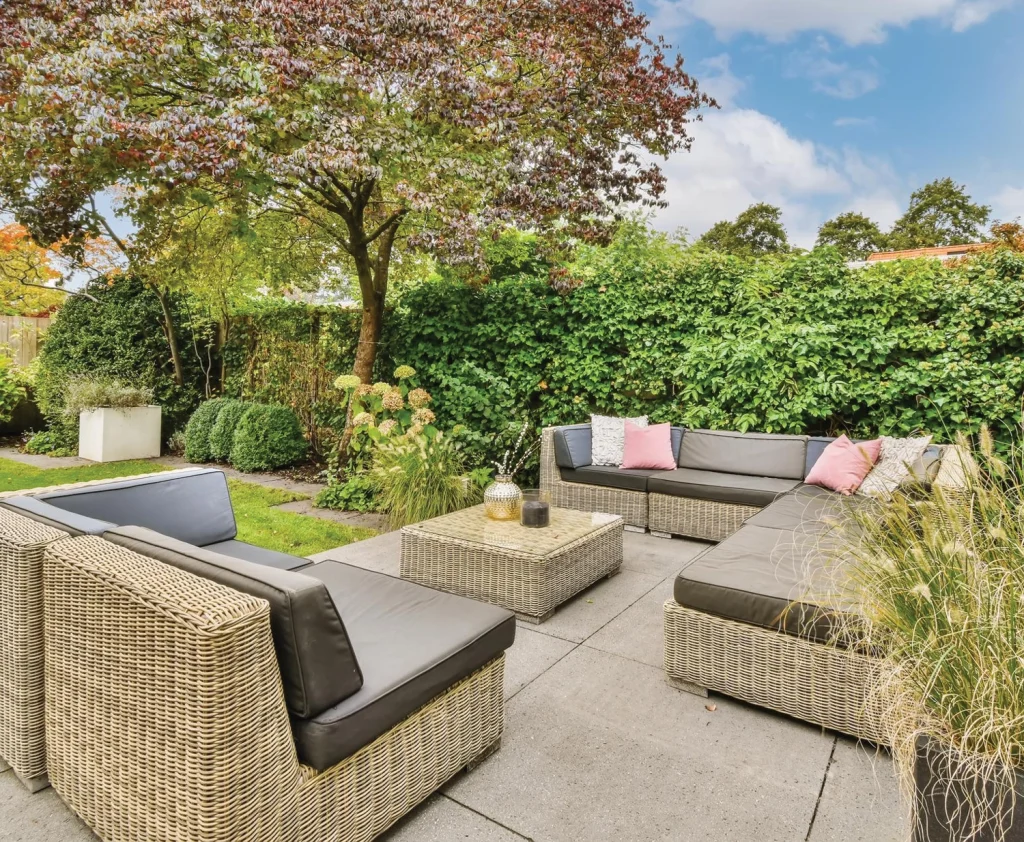
- The Lounge Zone: Often elevated or slightly separated using composite decking to create a distinct area for outdoor sofas or a fire pit.
- The Utility Zone: Dedicated pathways using contrasting materials (like block paving or gravel) leading to sheds, side access, or refuse storage, keeping high-traffic areas durable and distinct from leisure zones.
- Natural Stone: Robust and Timeless Options
For properties where ultra-modern porcelain might clash with traditional architecture, natural stone remains a highly sought-after, robust alternative.
- Indian Sandstone: Offers incredible durability with varied, natural color profiles. It provides a high-grip surface and handles heavy loads efficiently.
- Limestone: Known for its flat, smooth finish and consistent coloring. It brings a clean, premium look to patios and pathways but requires proper sealing to maintain its color against UV exposure.
- Compliance and Drainage: The Importance of SUDS
A critical factor often overlooked in hardscaping is water management. If you are paving over a front garden in London, you must comply with SUDS (Sustainable Drainage Systems) regulations.
If the surface is over 5 square meters, the water must drain into a permeable area within the property, or you must apply for planning permission.
- Our Approach: At Elite Landscaping Ltd, we handle all technical drainage requirements. We install permeable paving solutions, soakaways, and proper gradient falls to ensure your project is 100% compliant with local council regulations, preventing future legal or structural issues.
Partner with Elite Landscaping Ltd for Your 2026 Project
Executing a high-quality paving or decking project requires technical expertise, precise ground preparation, and premium materials. Elite Landscaping Ltd has been the trusted contractor for Croydon and South London since 2012.
Our Commercial Guarantee:
- 0% Upfront Deposit: We take on the financial risk. You pay only upon completion and full satisfaction.
- 10-Year Warranty: Every installation is backed by a comprehensive decade-long guarantee on structural integrity.
- Fully Insured Operations: Complete liability coverage for your peace of mind.
Secure Your Installation Date
Spring slots fill up rapidly. Ensure your project is completed before the peak summer season.
Contact Elite Landscaping Ltd today to arrange your free, no-obligation site visit and quotation.
Q&A
Question: Why is porcelain paving the leading choice for London gardens in Spring 2026? Short answer: Porcelain offers technical performance that suits London’s climate and modern design goals. With near-zero porosity (less than 0.5%), it resists frost damage, moss, and algae—key for damp winters. Its stain resistance means spills and organic matter don’t penetrate, so cleaning is simple. Dimensionally precise slabs deliver a sleek, architectural finish with tight grout lines. Crucially, matching indoor tiles to outdoor porcelain enables a seamless kitchen-to-garden transition, visually enlarging the property.
Question: Is composite decking really worth the higher upfront cost compared to timber? Short answer: Yes. Composite boards, made from recycled plastics and wood fibers, don’t warp, splinter, or rot, and they handle heavy use and weather swings without annual sanding, staining, or re-treating. Modern anti-slip technology also makes them safer around wet zones and family spaces. When you remove yearly maintenance costs and avoid early replacement, composite’s lifetime cost is substantially lower—often paying for itself within the first few years.
Question: How does garden zoning help me maximize usable space? Short answer: Zoning uses different materials and levels to define purpose-built areas, making small or irregular gardens feel larger and work harder. Place a dining zone near the house on stable porcelain or natural stone for heavy furniture. Create a distinct lounge area—often slightly raised—using composite decking for comfort and visual separation. Use contrasting, durable materials like block paving or gravel for utility pathways to sheds, side access, or bins, keeping traffic routes clear of leisure spaces.
Question: When should I choose natural stone over porcelain, and which stone suits what? Short answer: Choose natural stone when you want a robust, timeless surface that complements traditional architecture. Indian sandstone provides high grip, handles heavy loads, and offers varied, characterful colors. Limestone delivers a flatter, smoother finish with consistent tones for a clean, premium look, but it should be properly sealed to preserve its color against UV exposure. These options balance durability with classic aesthetics where ultra-modern porcelain might feel out of place.
Question: Do I need planning permission for paving, and how will Elite Landscaping Ltd ensure compliance? Short answer: For front gardens in London over 5 square meters, surface water must drain to a permeable area within your property; otherwise, you’ll need planning permission under SUDS (Sustainable Drainage Systems) rules. Elite Landscaping Ltd manages this end to end—designing and installing permeable paving, soakaways, and correct gradient falls—so your project is 100% compliant with local council regulations, avoiding future legal or structural issues. You’ll also benefit from our 0% upfront deposit, 10-year warranty, and fully insured operations across Croydon and Greater London.