Paving UK Landscapers
A new patio is a fantastic way to transform your garden for summer barbecues, but a poorly built one can quickly become a wobbly, weed-infested nightmare. The most expensive part of a bad paving job isn’t the initial cost—it’s paying a professional to rip it all up and do it again in two years. Getting it right the first time is crucial.
What separates a patio that lasts for decades from one that fails after the first winter? It’s not the slabs you see on top, but the expert foundation work you can’t see. This hidden layer is the single most important element preventing your paving from sinking and shifting. The quality of this unseen work is what the best landscapers stake their reputations on.
Understanding the process boils down to a few key decisions. By knowing what to look for in materials and quotes, you can ask the right questions, find a trustworthy professional, and ensure your investment enhances your home for years to come.
Porcelain vs. Natural Stone: Which Paving is Right for Your UK Garden?
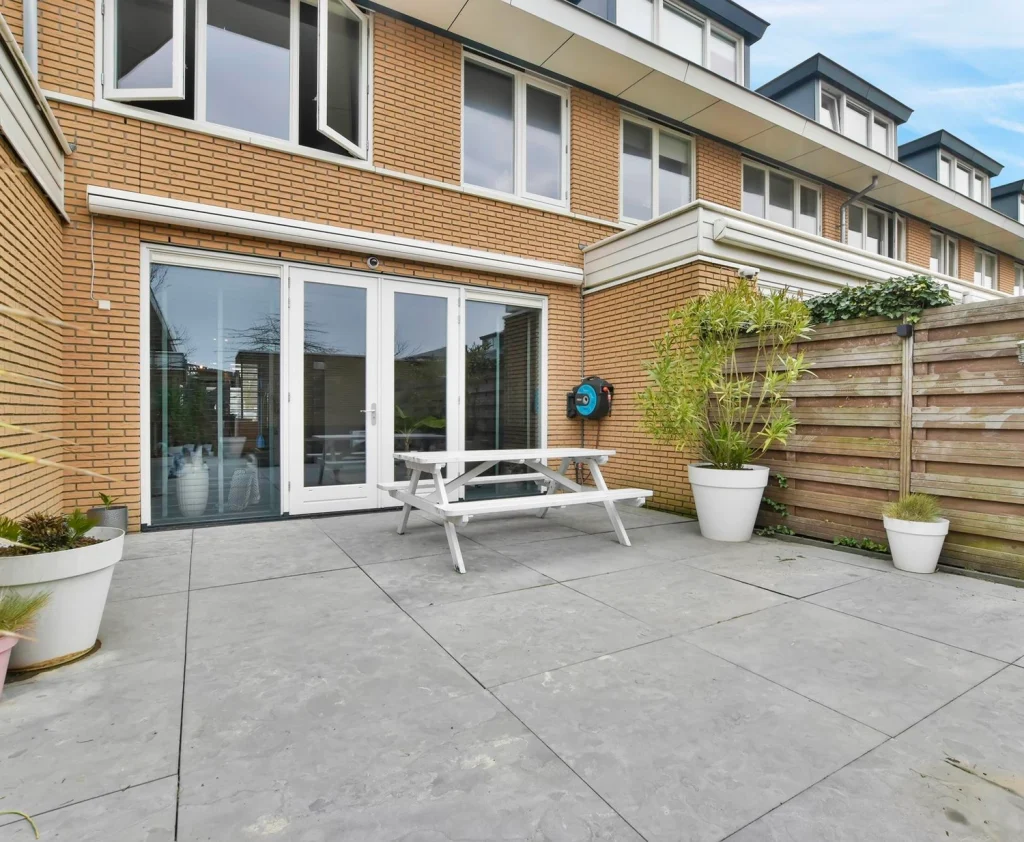
When choosing a new patio, your biggest decision is the material. The choice for garden paving in the UK often comes down to two popular options: sleek Porcelain and timeless Natural Stone (like Sandstone). They look different, but the most significant distinction is how they handle everyday life and our unpredictable weather.
It all comes down to a simple idea: porosity. Porcelain is a man-made tile that’s non-porous, a bit like a dinner plate; spills like wine or grease sit on the surface, ready to be wiped away. By contrast, Natural Stone is slightly porous, like a very hard sponge. It can absorb moisture, meaning it’s more likely to stain or grow green algae in our damp climate unless it’s sealed.
This key difference creates a clear choice between the two materials.
Porcelain Paving
Maintenance: Very low. Resists stains and moss, making it a top choice for low-maintenance gardens.
Look: Uniform, sharp, and modern.
Cost: Higher initial cost for both the slabs and the specialist installation required.
Natural Stone (e.g., Sandstone)
Maintenance: Higher. Benefits from sealing to prevent stains and needs more regular cleaning.
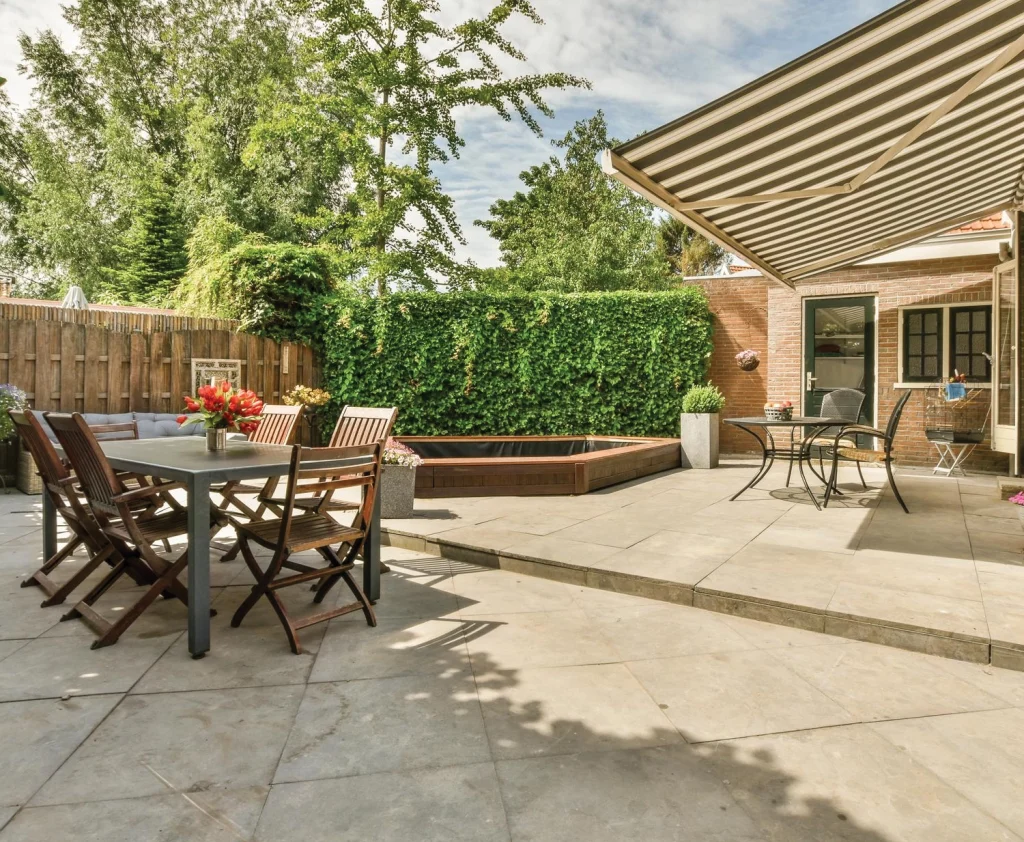
Look: Unique, rustic, and full of natural colour variations.
Cost: The stone itself is often more affordable.
Your choice depends on your style and how much upkeep you are willing to do. But whether you pick modern porcelain or rustic stone, the slabs are only half the story. A patio’s longevity truly depends on the hidden foundation built beneath it.
The Unseen Foundation: Why a Good Sub-Base is Non-Negotiable
Beneath every great patio is a secret weapon: the sub-base. Think of it as your patio’s foundation; while unseen, it does all the heavy lifting. This layer isn’t soil, but a deep bed of crushed stone, professionally known as MOT Type 1 Hardcore. A quality installation process always starts with digging out the area to make room for this vital foundation, which is what prevents your investment from literally sinking into the ground.
This layer is so crucial for two reasons. First, the hardcore is mechanically compacted to create a solid, interlocking base that won’t shift under the weight of furniture or foot traffic. Second, its depth protects against Frost Heave—a common UK problem where frozen water in the ground expands and pushes slabs upwards, causing them to become uneven. This is the main reason patios fail and people need to fix sunken paving slabs after a harsh winter.
This makes the most powerful question you can ask any landscaper: “What depth will the sub-base be, and what material will you use?” For a long-lasting patio, the answer you want to hear is “a minimum of 150mm (6 inches) of compacted MOT Type 1”. Anything less is a major red flag. This foundation is essential for garden paving, but the rules become even stricter for driveways that must support the weight of a car.
Are You Paving Your Front Garden? A Quick Guide to UK Driveway Rules
While a solid sub-base is key for any paving, front driveways have an extra layer of legal rules to consider. To help prevent flooding, UK regulations state that any new or replacement front garden paving over five square metres must handle rainwater properly. You can’t simply have it all run off into the street. Whether you need planning permission for a new driveway usually comes down to how you manage this water.
This leaves you with two main, approved options. The first is to use Permeable Paving, a clever surface that works like a sieve, allowing rainwater to soak through it and drain naturally into the ground below. These are excellent tarmac alternatives for driveways. Your other option is to use traditional non-permeable slabs (like porcelain) but direct the water into a professionally installed drainage system, such as a Channel Drain (a grate) that feeds into an underground Soakaway.
Getting this wrong can be a costly mistake. If a driveway doesn’t comply with these driveway drainage regulations UK, the local council has the power to serve an enforcement notice, forcing you to remove the entire surface at your own expense. A professional landscaper will understand these rules, known as SUDS, and factor the correct drainage solution into your quote.
How Much Does Paving Cost Per M2 in the UK? A Realistic Budget Guide
When budgeting for your project, the most useful figure is the cost per square metre (m²). Be careful: this isn’t just the price of the slabs you see in a shop. A professional quote from reputable paving contractors UK will be an all-inclusive price that covers the labour, the essential sub-base materials, and the removal of all the waste soil and old paving.
As a guide, a fully installed price—which includes everything from skip hire for waste to the complete ground preparation—typically falls into these ranges:
Block Paving: £80 – £120 per m²
Natural Stone (e.g., Sandstone): £100 – £150 per m²
Porcelain Paving: £120 – £180+ per m²
Seeing these figures, a quote that seems drastically cheaper should be a major red flag. It often means the contractor is skipping the deep, compacted sub-base—the very foundation that stops your patio from sinking. Opting for a more affordable material is a smart budget choice; compromising on the installation quality is not. Knowing what a fair price looks like is your first step in finding a trustworthy professional.
7 Vetting Questions to Ask Before Hiring a Paving Landscaper
Armed with a realistic budget, your next step is to find a trustworthy landscaper. A low price can be tempting, but a professional’s true value lies in their expertise, which protects your investment for years to come. Asking the right questions is the single best way to separate the experts from the “cowboys.” Use this checklist of professional landscaper vetting questions to hire with confidence.
A true professional will welcome this conversation. Their answers will tell you everything you need to know about the quality you can expect.
Can I see your portfolio and speak to a recent client? A proud contractor will be happy to show off their work and provide references.
What depth will the sub-base be? A good answer is at least 150mm (6 inches) of compacted hardcore. This is critical for longevity.
Are you insured? Can I see proof of your Public Liability Insurance? This is non-negotiable. It protects your property from any accidental damage during the project.
Is your written quote final and all-inclusive? Confirm that the price covers all materials, labour, skip hire, and waste removal to avoid surprise costs later.
What is the estimated timeline and start date?
How will you manage drainage to ensure water runs away from the house?
What guarantee do you offer on your workmanship?
Once you’ve found the right person for the job, you can move on to the fun part: deciding on the perfect design.
Smart Patio Ideas for Small UK Gardens
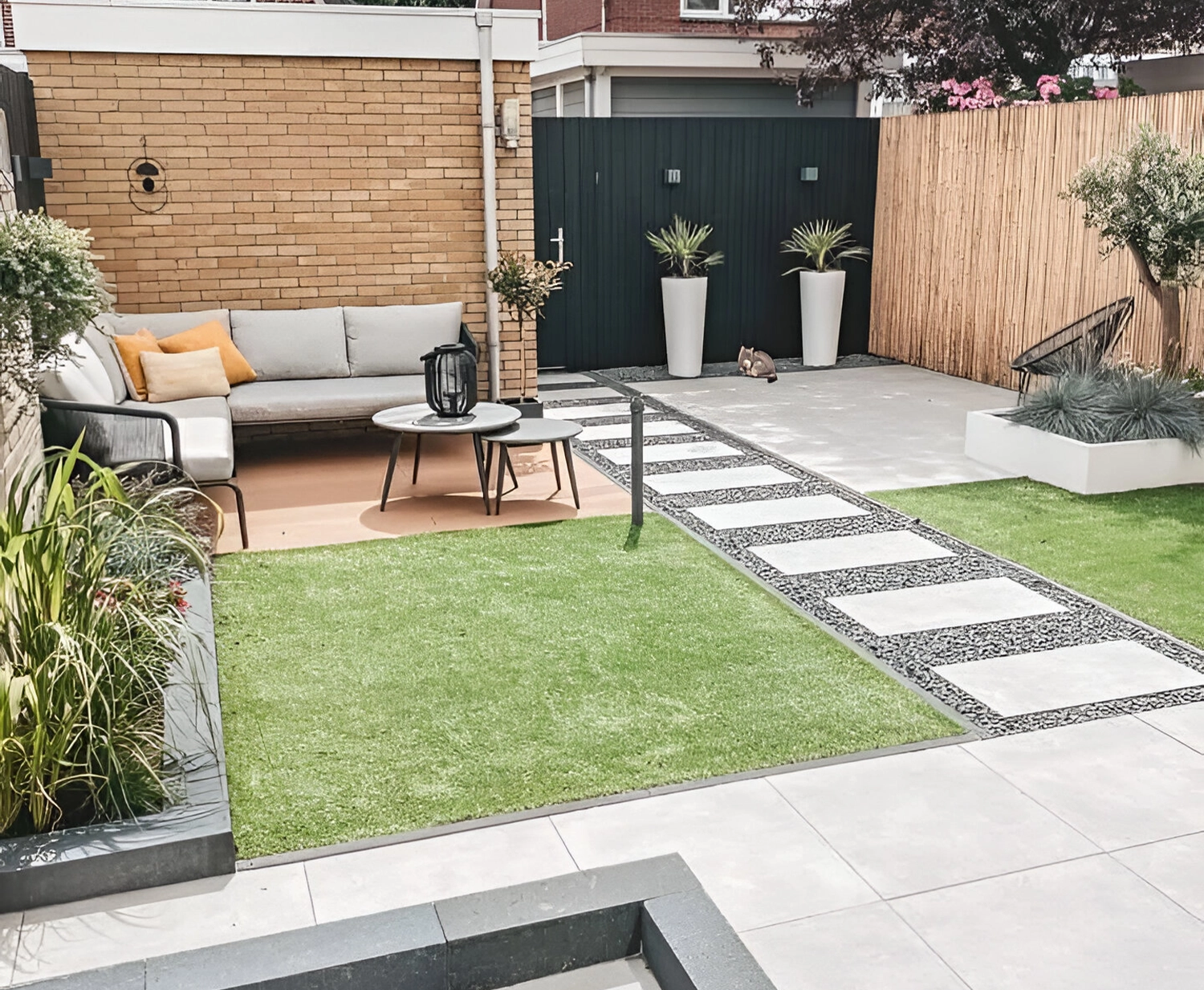
Got a small garden? The right paving can make a huge difference. Your best friends are light colours and large slabs. Pale grey, cream, or buff-coloured paving bounces light around, instantly making a compact area feel brighter and more open. When you choose large format slabs (think 600x900mm or bigger), you reduce the number of busy-looking grout lines, creating a calm, uncluttered surface that tricks the eye into seeing a more expansive space.
Beyond colour and size, one of the most effective patio design ideas for small gardens is to change the laying pattern. Instead of a standard grid, ask your landscaper to lay the slabs on a 45-degree angle. This diagonal pattern cleverly draws the eye outwards towards the corners of the garden rather than straight to the back fence. This simple visual trick creates a powerful illusion of width, making even a narrow garden feel more generous.
These elements offer some of the best budget patio ideas, as the impact comes from smart design, not just expensive materials. Making these key decisions before the work starts is crucial for a successful outcome.
Your Paving Project Checklist: From Idea to Installation
Hiring a paving landscaper doesn’t have to be a gamble. By looking beyond the surface slabs and understanding what truly makes a patio last, you can invest with confidence. A quality installation depends on a solid foundation, not just the final appearance.
Your project can be simplified into three core pillars:
Choose Your Material: Balance aesthetics, your budget, and the level of maintenance you’re prepared for.
Insist on the Foundation: Always confirm a deep, compacted sub-base of at least 150mm (6 inches).
Vet Your Professional: Use pointed questions to hire a contractor with confidence.
With this knowledge, your garden transformation is a manageable project. Your next step is to start browsing materials to refine your vision or find three local professionals to provide a detailed quote.